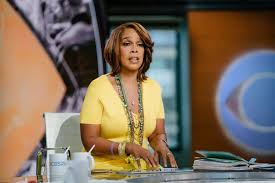
There are moments in television when the people who deliver the news suddenly become the subject of it. Gayle King, one of the most recognizable faces in American broadcast journalism, finds herself in that position more than she would like these days. With more than a decade of steady, confident presence on CBS Mornings, King has long been the kind of anchor viewers rely on for clarity rather than controversy. But as reports swirl about contract negotiations, newsroom restructuring and major changes coming to the morning franchise she has helped define, King is choosing to maintain an attitude of calm, purpose and even optimism.
Her recent appearance on Sherri, the daytime talk show hosted by Sherri Shepherd, made this clear. The interview aired on Thursday, December 11, and it quickly became one of the most talked-about moments of the week—not because King made any explosive revelations, but precisely because she didn’t. Instead, she reminded viewers, and perhaps some of her colleagues, that she is focused on the work rather than the headlines.
The speculation about King began in October, when Variety published a report suggesting that the 70-year-old veteran anchor was expected to exit CBS Mornings once her current contract expired. It was a striking claim, especially considering that King has spent the last 13 years transforming the show into a highly respected competitor in a crowded morning TV landscape. Her conversations—whether with political leaders, Hollywood stars or everyday Americans—have shaped the program’s tone and anchored its reputation for depth and integrity. So the idea of King quietly slipping out of that role stirred not only curiosity but concern among fans and industry watchers.
But King, with her characteristic blend of grace and straightforwardness, made clear on Sherri that she is not going to let rumor or industry chatter dictate her mindset. “I’ve decided I’m going to stay out of the drama — and there is some drama,” she told Shepherd, leaning into the moment with both honesty and restraint. “I’m going to stay out of that. I’m just going to continue to do my job.”
Her words landed with a subtle but unmistakable firmness. She wasn’t dismissing the speculation, nor was she feeding it. Instead, she was reminding people that gossip, however persistent, is not the same thing as fact. She also hinted that the internal reality at CBS may be quite different from what outsiders have been claiming. “What I say is this, I’m not going to negotiate in the press, but I hear one thing in the building and one side outside of the building,” she explained. “I’ll be reading an article and going, ‘That’s not true.’”
It was a familiar struggle for anyone who has ever worked in a high-profile environment: the internal conversations that rarely match the gossip circulating beyond the walls. King’s acknowledgment of this gap revealed both frustration and humor. She didn’t seem angry—just amused, perhaps a little bewildered, and most of all committed to not letting the noise distract her.
CBS News, for its part, has attempted to shut down the rumors. In a statement issued to USA TODAY in October, a spokesperson confirmed that “there have been no discussions with Gayle about her contract that runs through May 2026.” The network further emphasized that King is “a truly valued part of CBS, and we look forward to engaging with her about the future.” Such language, while diplomatically phrased, strongly suggested that the network had no intention of letting go of one of its most important on-air talents.
But the environment around King has undoubtedly shifted. The same week she appeared on Sherri, CBS announced that Tony Dokoupil, her cohost on CBS Mornings, will be leaving the show in January to take over as anchor of CBS Evening News. It’s a major move, one that comes just a year after Norah O’Donnell, his predecessor on the evening program, stepped away from the same role. Dokoupil’s transition marks another significant reshuffling at CBS News—one that naturally raises questions about what the morning show will look like in the months ahead.
King didn’t pretend the change would be minor or inconsequential. Instead, she acknowledged the reality with her trademark straightforwardness. Dokoupil’s departure is “certainly going to mean changes” for the show, she said. But what those changes will be, and how they will affect the dynamic on CBS Mornings, remains to be seen. What was most interesting, though, was her demeanor—a mixture of pragmatism and faith that everything will unfold as it should.
This sense of groundedness showed again when Shepherd asked whether King had a plan in place if the rumors turned out to be true. Many people in positions more stable than King’s would still feel pressure to craft a backup plan—another network, another medium, another chapter. But King’s response was unmistakably confident: “I don’t go in hypotheticals,” she said. “It’s like if you’re running for office and said, ‘Well, if you don’t win, what are you going to do?’ I don’t think like that. And I also believe everything works out the way it’s supposed to.”

It was a simple statement, yet one layered with meaning. For King, hypotheticals are distractions—mental detours that discourage people from fully committing to the work in front of them. Her focus is on the present, on doing her job well, on being part of a team that informs millions of viewers each morning. If changes come, she will handle them in the moment. If opportunities arise, she will recognize them when they appear. But she refuses to create scenarios for herself before reality calls for them.
It’s a viewpoint that reflects both maturity and self-assurance. After all, King’s career has always been rooted in authenticity. She has a presence that feels both polished and deeply relatable, a rare combination in an industry that often demands either perfect neutrality or exaggerated personality. Her ability to be gentle while asking hard questions, to be vulnerable while maintaining professionalism, has made her one of the most trusted figures in modern television journalism.
Her friendship with Oprah Winfrey — a relationship spanning more than four decades — has brought her added visibility, but it’s King’s own work ethic and professionalism that have made her indispensable at CBS. Over the years, she has interviewed presidents, covered breaking news, traveled the world for major stories, and handled on-air crises with grace. She has weathered personal losses, cultural shifts and changing cohosts, yet through it all she has remained steady. That steadiness is not only her brand; it’s her legacy.
Given all this, the idea of Gayle King leaving CBS Mornings anytime soon feels almost unimaginable to many viewers. But morning television is an ever-changing landscape, shaped by ratings, contracts, network strategies and the constant competition for viewers’ attention. Even the strongest anchors sometimes face transitions that seem sudden from the outside. King has lived through these cycles long enough to know that few things in TV are permanent. But she has also lived long enough to trust that her path—whatever it becomes—will unfold in a way that makes sense when the time comes.
Her recent comments highlight something else as well: the emotional complexity of working in an environment where decisions are often made behind closed doors while the public speculates freely. Television is, in many ways, a deeply personal medium. Viewers build connections with the people on their screens; they begin to feel as if they know them. So when rumors about King’s future spread, they sparked the kind of reactions typically reserved for a family member or close friend. People wanted answers, and they wanted reassurance.
Yet King’s clarity in the face of that scrutiny is a reminder that public figures, even those beloved by millions, are still navigating uncertainty just like everyone else. Her willingness to say she doesn’t know exactly what the future holds—and that she’s okay with that—makes her feel human, even as she remains one of TV’s most iconic professionals.
Still, it’s clear that if King were to leave, it would mark the end of a significant chapter for CBS. Her presence has shaped the show’s identity; her voice has reliably guided viewers through moments of national crisis and celebration. And while the network has emphasized that her contract remains in place until 2026, the current media environment is unpredictable. Anchors are shuffled, shows are reimagined, and corporate strategies evolve. But for now, King herself appears to be standing on solid ground.
Her whole outlook reflects a calm assurance that has been with her throughout her career. Rather than reacting impulsively to rumors or retreating into silence, she is choosing a path that honors the profession she loves. She is showing viewers that steadiness is just as important behind the scenes as it is on camera. In times when the industry can feel chaotic, her stability becomes a kind of anchor—not only for CBS, but for the audience she speaks to every morning.
The irony, of course, is that King never asked to be part of this storyline. She would rather be reporting the news than reading about herself in it. But she understands that visibility comes with a certain level of exposure. The key, for her, is not letting that exposure shape her direction. She refuses to be defined by talk of exits, restructures or hypothetical futures. She prefers to define herself—and her career—through the work she does each day.
Perhaps that is why her response on Sherri resonated so strongly. It wasn’t dramatic or defensive. It was thoughtful, grounded and confident, reflecting a woman who knows her worth but doesn’t feel the need to shout it. She understands how the media machine works; she understands how quickly rumors can travel. But she also understands who she is, and that knowledge seems to be her greatest source of calm.
As the conversation around CBS continues to evolve—with new anchors stepping in, familiar faces stepping out, and viewers adjusting to shifting dynamics—it’s clear that Gayle King remains central to the network’s identity. Her voice carries weight, her presence carries comfort and her professionalism continues to set a standard.
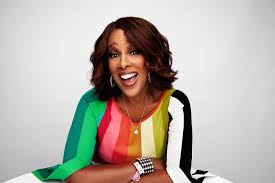
In an era where television personalities often become the story for all the wrong reasons, King remains an example of how to navigate uncertainty with grace. She is choosing to stay focused on what she can control: her work, her integrity and her belief that whatever happens next will happen for a reason.
And for now, that is more than enough.