
For years, Kimora Lee Simmons has lived her life in full view of the public eye, evolving from a teenage supermodel into a global fashion brand, a business mogul, and a mother raising four children largely on her own terms. Recently, as she reemerged on reality television and began speaking more openly about her personal life, a long-simmering chapter from her past reignited in a very public way. At the center of it is her complicated and deeply fractured relationship with her ex-husband, hip-hop pioneer Russell Simmons, and the sharply contrasting stories they now tell about where they stand.
Kimora’s comments came quietly at first, folded into interviews meant to spotlight her return to television with “Kimora: Back in the Fab Lane.” In conversations with People magazine and later with USA TODAY, she was asked about her relationships with the fathers of her children. Her answers were straightforward and notably unemotional. She explained that she does not have much of a relationship with them, including Russell, and emphasized that the distance was not her choice. According to her, the lack of involvement stems from their absence rather than her unwillingness to maintain contact.
Kimora and Russell share two daughters, Ming Lee, now 25, and Aoki Lee, 23, both of whom have grown up in the spotlight alongside their mother. Over the years, Kimora also became a mother to two sons with different partners: Kenzo Lee, 16, with actor Djimon Hounsou, and Wolfe Lee, 10, with former investment banker Tim Leissner. When asked if any of these men are actively present in her life today, Kimora’s response was clear. She said they are not really part of her day-to-day world and have minimal involvement with the children.
Rather than framing this as a personal grievance, Kimora spoke about it as a reality she has accepted. She described herself as the primary parent, explaining that what little co-parenting exists is inconsistent at best. In her words, she is not sharing the load so much as carrying it entirely. She said her children are with her almost all the time, and while they may occasionally see their fathers, those relationships are not something she tries to manage or interfere with. She believes that connection, if it exists, must be built independently.
Her tone suggested a woman who has long since adjusted to being the anchor of her household. She spoke about building a supportive environment around her children, keeping them close and surrounded by family, friends, and a broader community she described as their “village.” In that framing, the absence of their fathers was not the defining feature of their upbringing. Stability, love, and consistency were.
Those comments, however, struck a nerve with Russell Simmons, who responded not through a private conversation but via social media. In a Threads post published on Dec. 14, Russell reposted Kimora’s People interview and offered a sharply different version of events. Opening with the assertion that there are “two sides to every story,” he laid out claims that directly contradicted Kimora’s narrative of absence and disengagement.
Russell alleged that he provided Kimora with substantial financial support for two decades following their separation, claiming he paid her $50,000 a month for 20 years. In his telling, this financial contribution was evidence of long-term commitment, not detachment. He also portrayed himself as emotionally present, describing himself as her closest and only friend during that time. According to Russell, he was deeply embedded not just in the lives of their two daughters, but also in the lives of Kimora’s other children.
One of his most striking claims was that he served as a godfather figure to Kimora’s sons and that this role was abruptly cut off. He accused Kimora of stealing his stock, an allegation he framed as the turning point in their relationship. From that moment on, he said, he has been fighting not only for financial restitution but for the love and connection of his children.
Russell went further, alleging that Kimora threatened to sever his relationship with their daughters if he pursued legal action against her. This accusation painted a picture of a bitter power struggle in which financial disputes and parental access were deeply entangled. His post read less like a measured rebuttal and more like a release of long-held resentment, suggesting unresolved conflict that has been festering for years.
The contrast between their public statements could not be more stark. Kimora’s interviews were calm, reflective, and focused on her present reality as a mother. Russell’s response was emotional, confrontational, and rooted in specific grievances from the past. Each tells a story of loss and exclusion, but from opposing perspectives.

For Kimora, the story is about stepping into a role out of necessity. She presents herself as a woman who did not choose to parent alone but did not shrink from it either. Her emphasis is on resilience and protection, on keeping her children close and ensuring they feel supported regardless of who is absent. She speaks of boundaries rather than bitterness, suggesting that she has made peace with the limitations of her relationships with her ex-partners.
Russell, on the other hand, frames himself as a man who was pushed out. In his version, he was present, supportive, and financially generous, only to be cut off through betrayal and threats. His words suggest deep hurt over his perceived erasure from his children’s lives and a sense that his contributions have been ignored or rewritten.
Public reaction to the dispute has been shaped not only by what each has said, but by who they are today. Kimora’s image has remained largely intact over the years, bolstered by her business success and her reputation as a devoted mother. Her return to reality television has been framed as a comeback, a chance to reintroduce herself on her own terms.
Russell’s public standing, however, has been profoundly altered. Once celebrated as a visionary in the music industry, his legacy has been overshadowed by serious allegations. He has been accused by more than a dozen women of sexual assault, accusations he denies. In the aftermath, he relocated to Bali, Indonesia, a country without an extradition treaty with the United States. This move has fueled criticism and skepticism, further complicating how his statements are received.
That context inevitably colors the way audiences interpret his response to Kimora. For some, his post appears as an attempt to reclaim control of a narrative at a time when his credibility is under intense scrutiny. For others, it reads as the anguished voice of a father who believes he has been unfairly cut out of his children’s lives.
Kimora has not publicly responded to Russell’s claims, at least not directly. In her interviews, she seemed more focused on the present than on litigating the past. She acknowledged that fostering healthy relationships requires effort from all sides and that sometimes, that effort is not reciprocated. Rather than dwell on blame, she emphasized the structure she has built for her children and her confidence that they will be okay.
Her approach reflects a broader theme in her public life: control over her own narrative. From her early modeling days to building fashion empires like Baby Phat, Kimora has consistently positioned herself as a woman who adapts, reinvents, and moves forward. In speaking about her family, she appears to apply the same philosophy, choosing stability over public sparring.
Still, the public nature of Russell’s response ensures that this chapter is far from closed. Their daughters are now adults, capable of forming their own perspectives on their parents’ history. The dispute, once private, has unfolded on social media and in interviews, becoming part of a larger public conversation about power, parenting, and perspective.
At its core, this is not just a celebrity feud. It is a familiar story magnified by fame: two people who shared a life and children, now separated not only by distance but by fundamentally different interpretations of the same events. One speaks of abandonment, the other of exclusion. One emphasizes survival and self-reliance, the other sacrifice and loss.
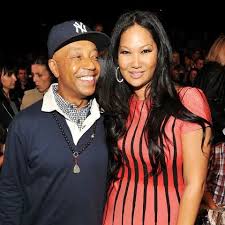
Whether there is reconciliation ahead is unclear. Kimora’s words suggest acceptance rather than hope for change, while Russell’s suggest unresolved anger and a desire to be heard. What is certain is that both believe their version is the truth, and both feel wronged.
In the end, the only people truly caught in the middle are their children, whose lives have unfolded under the weight of public scrutiny and private conflict. Kimora insists that they are supported, loved, and surrounded by a strong community. Russell insists that he has fought to remain part of their lives. Between those two claims lies a reality only they fully know.
As Kimora continues her return to television and Russell remains largely out of the public eye in Bali, their stories will likely continue to diverge. For now, what remains is a reminder that even among the rich and famous, family fractures are rarely simple, and the truth often lives somewhere between two very different sides of the same story.