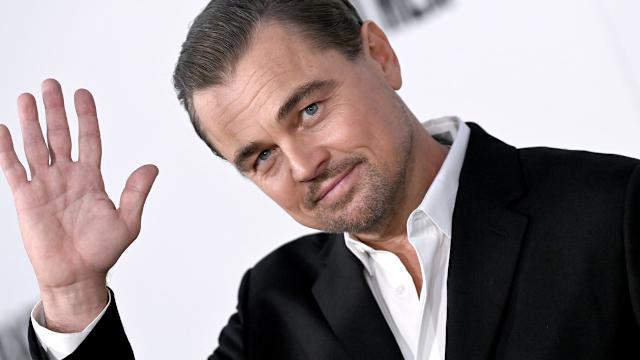
Leonardo DiCaprio has spent more than three decades in Hollywood, yet even after all these years, he speaks about fame as if it is a wild creature he has never fully learned how to tame. That tension between public visibility and personal invisibility has shaped nearly every chapter of his life, and in a new interview with Time magazine, the 51-year-old actor offered a rare look at just how deeply that balancing act has defined him. Named the magazine’s 2025 Entertainer of the Year, DiCaprio used the moment not to celebrate, boast or even reflect on his body of work, but to talk about the struggle that has always lingered behind it: maintaining privacy in a world that refuses to stop watching.
He spoke softly and deliberately about the philosophy that has guided him since his early twenties, a principle he repeats not with arrogance but with the hard-won clarity of someone who has spent the majority of his life under scrutiny. His rule is simple, even if he admits he is still learning how to follow it: only step into the public space when he has something meaningful to contribute. Any other time, he prefers to disappear. It is a strategy that sounds counterintuitive for someone whose career depends on visibility, yet it has become the very reason he has survived Hollywood’s harshest edges. “It’s been a balance I’ve been managing my whole adult life,” DiCaprio said, noting that even now he doesn’t feel like an expert at it. But it is the principle that has helped him carve out a long career built on substance rather than spectacle.
The roots of this philosophy can be traced back to one seismic moment in his life: 1997, when Titanic was released and turned him from a respected young actor into one of the most recognizable faces on the planet. At just 23, he was thrust into a global mania unimaginable to most people. Lines of screaming fans, intense media fixation, tabloid narratives he couldn’t control — it all happened overnight. That level of attention can change someone in strange and permanent ways, but in DiCaprio’s case, it forced him to think strategically rather than reactively. He knew he wanted a long career. He knew he loved acting too much to let fandom consume him. And so he made a decision that would shape how the world would know him from then on: he stepped back.
He didn’t stop making films, of course, but he stopped allowing fame to dictate the rhythm of his life. Instead of appearing constantly at events or seeking media attention, he retreated. He let his work speak where he remained silent. It was a kind of disappearing act that contradicted every expectation of what a modern celebrity is supposed to be. He wasn’t posting. He wasn’t narrating every detail of his daily life. He wasn’t chasing publicity. And yet, paradoxically, the less he showed, the more fascinated the world became. Somehow, by pulling away, he added to his mystique.
But while his strategy helped cloak his professional life in a protective layer of privacy, it couldn’t fully shield him from public scrutiny. For decades, the actor has been the subject of jokes, commentary and analysis surrounding his romantic relationships, particularly the age gaps between him and his partners. His personal life became something people felt entitled to dissect, even when he refused to address it publicly. From models to actors to international celebrities, every relationship he has had has been broken down, mocked or scrutinized. It’s a strange burden for someone who has spent his adult life trying not to make his private world a spectacle.
His most recent relationship with Italian supermodel Vittoria Ceretti, who accompanied him to the Met Gala earlier this year, sparked the usual wave of headlines. She was 26, he was 50 — another example, critics said, of a familiar pattern. But DiCaprio did what he always does: nothing. No statement. No defense. No explanation. It is not that he cannot speak; it’s that he refuses to let public noise shape his personal decisions. His silence is not avoidance but a form of control. By choosing not to engage, he maintains ownership of the parts of his life that matter most to him. Fame may hover around him at all times, but he does not allow it into the parts of his world he considers sacred.
Despite the chatter surrounding his private life, DiCaprio remains, above all else, a man deeply committed to his craft. He has worked with legendary directors and has built a filmography that spans genres, decades and themes. He has played dream architects, Wall Street antiheroes, 19th-century frontiersmen, Shakespearean lovers, undercover agents and tormented romantics. Yet he approaches his work with a seriousness that is spoken about often by his collaborators. His performances are never lazy, never indifferent. He immerses himself fully, and perhaps part of the reason he can disappear so effectively in real life is because he gives so much of himself to the characters he plays on screen.
But even amid that dedication, there are moments when DiCaprio steps out of the world of craft and into the world of memory. In the interview, he reflected on someone who influenced him long before he was the global superstar he is today. Diane Keaton, with whom he starred in the 1996 drama Marvin’s Room, passed away earlier this year at 79 from bacterial pneumonia. Her death hit him with a weight that could be heard in his voice as he remembered her laugh — a laugh so bright and loud that it echoed across the movie set. He described how she made him feel like the funniest person in the world, how her joy was infectious, how he found himself trying each day to earn that signature Keaton outburst of laughter.
That memory reveals something core about DiCaprio: beneath the fame, beneath the privacy, beneath the caution, he remains someone who cherishes the human connections formed through his work. His recollections of Keaton were not about technique, legacy or Hollywood stardom. They were personal, deeply human and tender. He remembered humor, warmth, energy — the details that stay imprinted long after the cameras stop rolling. He described her as incredible, and one could tell that the word meant more than admiration; it meant gratitude. She was part of the mosaic of his early career, one of the artists who shaped him during the years when he was learning not just how to act, but how to navigate the world that came with acting.
It is moments like these — moments of reflection, honesty and vulnerability — that remind the world that DiCaprio is not simply an icon or a symbol of Hollywood mythology. He is, at his core, a person trying to make sense of a life lived in public while wishing much of it could remain private. His challenges are not ordinary, but the emotions behind them are universal: the desire for peace, the need for boundaries, the struggle to hold onto oneself in a world that constantly tries to define you.
DiCaprio’s career endurance is not accidental. It is the result of discipline, intention and the refusal to be consumed by the machinery of celebrity. Most stars either burn bright and fade or cling so aggressively to the spotlight that they lose authenticity along the way. DiCaprio has done neither. He has learned the art of appearing only when necessary, speaking only when ready and disappearing long enough to protect the parts of himself that the world still doesn’t know — and likely never will.
And that may be the secret to why he continues to matter. In an era where fame is measured by constant visibility, he remains an anomaly. He withholds. He retreats. He preserves a sense of mystery that most public figures have long abandoned. The world doesn’t know his daily routines, his inner thoughts, his private habits or the intricacies of his relationships. Instead, it knows his work. It knows the characters he creates, the worlds he helps build, the cinematic moments that become cultural memory.
His restraint is his armor. His privacy is his rebellion. His silence is his strength.
And perhaps the most fascinating thing about him is that after decades of stardom, after awards and global recognition, after countless headlines and cultural conversations, he still speaks about privacy like a student learning a craft rather than a master who has it all figured out. The humility in that admission reveals something essential: the balancing act is ongoing. Fame doesn’t get easier. Privacy doesn’t get simpler. But DiCaprio has found a rhythm within the chaos, a way to live inside the spotlight without letting it swallow him.
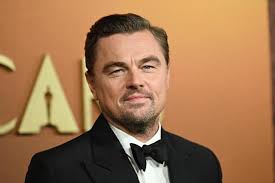
For all the noise that surrounds his life, the most enduring truth about Leonardo DiCaprio may be this: he has managed to remain himself. Not the caricature the media plays with, not the punchline social media invents, not the tabloid figure constructed out of speculation. Just a man who loves what he does, cherishes the people he has worked with, guards the parts of his world that matter, and steps forward only when he believes he genuinely has something to offer.
That kind of intentional living is rare in any field, but in Hollywood, it is almost unheard of. Maybe that is why, even now, after so many years, he remains magnetic — not because he is everywhere, but because he chooses to be almost nowhere at all.