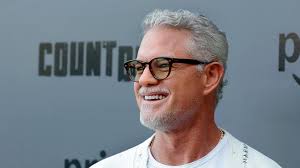
Eric Dane has spent most of his career portraying characters who carry confidence like second nature — the charming Dr. Mark Sloan on Grey’s Anatomy, the emotionally volatile Cal Jacobs on Euphoria, and numerous others who have left an imprint on audiences. Throughout decades in the industry, he’s taken on roles that have ranged from suave to tortured, comedic to tragic. But nothing he has played on screen compares to the role he now lives every day: a man confronting amyotrophic lateral sclerosis, a disease that changes everything while testing the limits of the human spirit. And yet, despite the enormity of that battle, Dane has made one thing absolutely clear — he is not done acting, not done showing up, and certainly not done fighting.
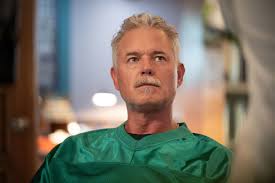
When Dane stepped into a panel hosted by the advocacy group I Am ALS on December 2, he wasn’t there as a celebrity giving sound bites. He was there as someone speaking from the deepest part of his lived experience, sharing both the vulnerability and the surprising resilience he has discovered since his diagnosis. The conversation centered around his recent appearance in the medical drama Brilliant Minds, where he portrayed a firefighter and father battling ALS. It was his first acting project since revealing his condition publicly in April, and stepping into a role that mirrored his own life made the experience not just professional but deeply personal.
He admitted he had no expectations about how he would navigate work after his diagnosis. Historically, ALS is a condition that severely limits muscle function over time, making physical acting roles extraordinarily difficult. In that panel, Dane addressed that reality head-on. He didn’t sugarcoat the limitations, yet he also didn’t frame them as barriers to his purpose. Instead, he spoke with a striking blend of acceptance and determination. “I’m fairly limited in what I can do physically as an actor,” he said, “but I still have my brain, and I still have my speech, so I’m willing to just do about anything. I’ll take on any role. From here on out, it’s going to have to be ALS-centric. It’s going to be very difficult for me to play any other role.”
Those words carried the weight of someone who understands how drastically his life has changed but refuses to let that stop him from continuing to do what he loves. For many actors, being funneled creatively into a narrow category of roles would be frustrating, perhaps even heartbreaking. But Dane spoke about this shift with surprising peace. “I’m fine with that,” he said. “I’m grateful that I can still work in any capacity.” Gratitude has become a theme in his life — not because the illness is easy, but because he’s unwilling to let it extinguish his sense of purpose.
His return to medical drama in Brilliant Minds felt, in many ways, like a full-circle moment. After nearly a decade playing Mark Sloan, one of the most beloved characters in Grey’s Anatomy history, stepping back into a medical world was familiar territory. But this time, it came with new emotional stakes. Playing a character with ALS wasn’t a performance he could distance himself from. It required confronting parts of what he is living through now, and he didn’t try to hide that emotional overlap. “There were moments it was difficult for me to get the lines out,” he admitted, acknowledging that the role pushed him to confront his own grief and fear. Yet, he described the experience not as draining but as cathartic. He found something healing in the process — a rare form of artistic honesty that only emerges when life and storytelling collide.
The emotional journey didn’t begin on set; it began the moment he heard the diagnosis. Dane has been transparent about his early reactions to learning he had ALS, and the raw honesty in his reflections allows people to see him not just as an actor, but as a human being trying to process something unimaginable. “I had every right to crawl into bed and cry for two weeks straight,” he said during the panel. He expected that would be his reaction — expected to collapse under the weight of a disease that drastically alters the course of a person’s life. But once again, he found himself surprised by his own resilience. “I have no reason to be in good spirits at any time on any given day,” he explained. “But I was pleasantly surprised to realize that I wasn’t built like that.”
This shift — discovering unexpected strength instead of the despair he assumed would consume him — became one of the pivotal revelations of his journey. It reframed how he sees himself and how he chooses to show up for others. Dane has been candid about the fact that he once considered himself fairly self-focused. Being in the entertainment industry can often amplify that tendency; careers are built on self-promotion, self-protection, and personal image. But ALS forced him to confront a new reality, one in which he felt a growing responsibility to advocate, educate, and connect with others going through similar struggles. “It’s imperative that I share my journey with as many people as I can,” he explained. “Because I don’t feel like my life is about me anymore.”
That shift in perspective didn’t come easily. He described wrestling with the realization that his life no longer revolves solely around his own desires. Accepting that required humility and reflection, but he ultimately believes it’s what allows him to keep moving forward. “I don’t think I’d be able to move forward if that were the case,” he said. Purpose, he discovered, is not only healing but necessary.
Dane hasn’t just vocalized this newfound commitment — he has put it into action. On September 29, he traveled to Washington, D.C., to meet with Representative Eric Swalwell as part of his work with the organization I Am ALS. His advocacy isn’t symbolic or superficial; it’s charged with personal urgency. In front of lawmakers and advocates, he spoke from the heart about why he has become so publicly involved in raising awareness. “I want to ring every bell,” he said during his speech. And then he shared the deepest reason of all — his daughters. “I have two daughters at home. I want to see them graduate college, get married, maybe even have grandkids.”
That vision — being present for the milestones of the people he loves — is what fuels him. His message was not only a plea for awareness, but a declaration that he intends to fight with every ounce of strength he has. “I’m going to fight until the last breath on this one,” he vowed, a promise that reflects both a father’s love and a fighter’s resolve.
What stands out about Dane’s journey is not that he presents himself as fearless. Instead, it is his willingness to embrace vulnerability while refusing to surrender hope. He does not pretend the road ahead is easy. ALS is a brutal disease, one that challenges the body relentlessly. But Dane’s perspective underscores something powerful: courage is not the absence of fear, but the choice to keep moving through it.
In continuing to work, he is redefining what it means to act with limitations. In sharing his story, he is offering comfort and visibility to thousands of individuals and families affected by ALS. And in advocating for research and awareness, he is using his platform in its most meaningful form — not for celebrity, but for humanity.
Eric Dane has always been a recognizable figure in Hollywood, admired for his roles and presence. But now, his public image carries a new weight. He is evolving into someone whose story reaches far beyond the screen, touching people not because of his fame but because of his honesty, strength, and willingness to fight for others even while fighting for himself.
His experience in Brilliant Minds crystallizes the intersection of his past and present: an actor returning to familiar territory while navigating unfamiliar challenges, using storytelling not just as entertainment but as connection. Acting may look different for him now, but it has not lost its meaning. If anything, it has gained new depth.
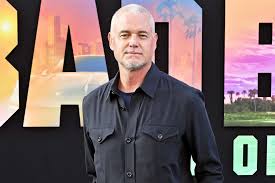
In sharing his journey, Dane gives others permission to acknowledge their own struggles while still seeking out moments of hope and purpose. His story reminds us that even in the face of life-altering diagnoses, people can continue to evolve, inspire, and contribute in ways they never expected.
Eric Dane is not stepping away from the spotlight — but he is reshaping it into something braver, more vulnerable, and more profoundly human. As he continues to work, advocate, and fight, his message remains both simple and powerful: life may change, but purpose can endure. And as long as he has the strength to speak, to act, and to fight, he intends to use every moment to raise awareness, spark change, and show his daughters — and the world — what resilience truly looks like.